My Research
Human Origins · Archaeology · Anthropology
My curiosity is driven by a desire to grasp the diversity of human experiences across time and space; how different societies, from our earliest ancestors to today, show us what it means to be human, through the way they lived and the way they treated their dead. I am very interested in how humans live, cooperate, compete, and adapt — the capacity to cope with uncertainty and changing conditions in our social and ecological environments. My doctoral thesis at the University of Oxford used satellite imagery and spatial data to analyse how societies at the southern edge of the Sahara adapted their livelihoods to changing climatic conditions, until desert expansion forced them to migrate elsewhere. Most of my publications are freely available open-access.
In collaboration with other leading scholars, I have also investigated how seasonality influenced human behaviour at the dawn of technology (Dr James Clark — PhD, Cambridge); how societies in different polar environments have developed similar solutions to similar problems or how to monitor heritage at risk (Dr Jonathan Lim — PhD, Oxford); and how to apply forensic and computational methods to animal bones and determine if humans or carnivores ate them (Prof Jose Yravedra, Complutense).
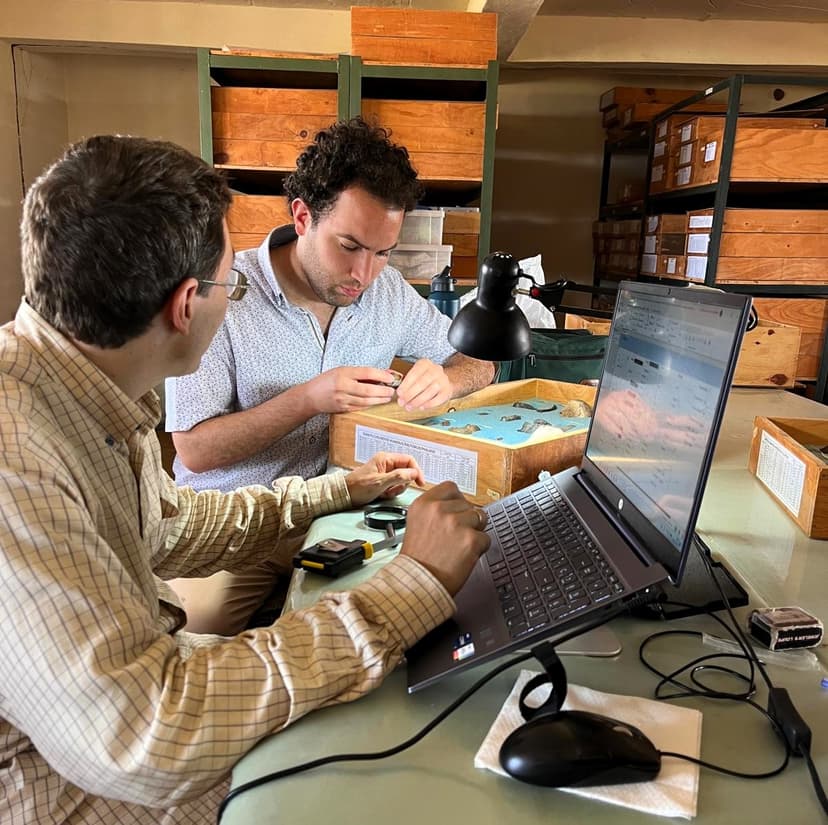
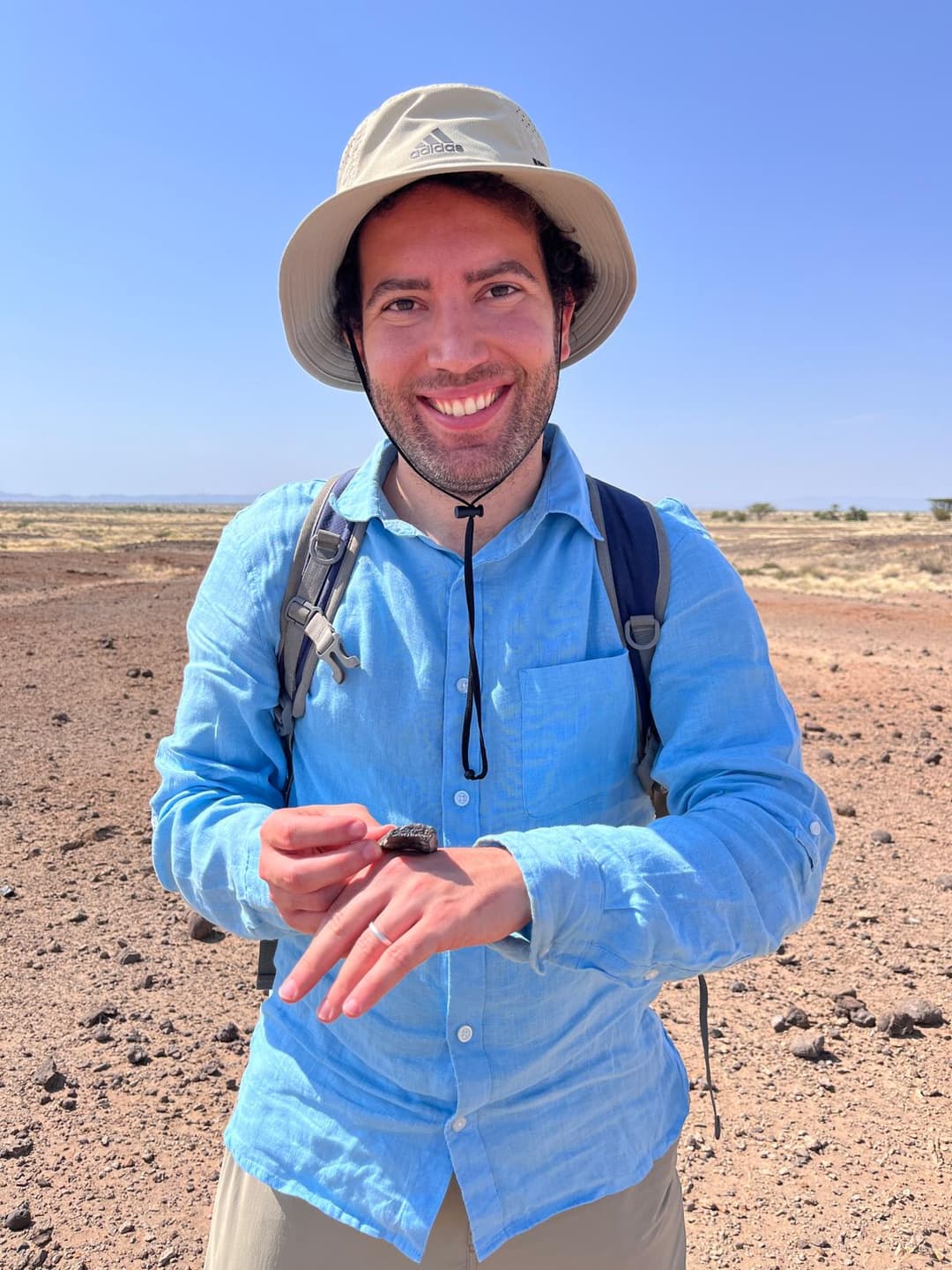
Over the past decade, I have excavated a number of archaeological sites from across the world: caves in southern Spain, where Neanderthals and even earlier human ancestors lived; Taforalt (Morocco), a cave with the oldest cemetery in Africa, where I met my wife Jeannette; and the arid landscapes of Turkana, Kenya, where more clues on the origins of our own species still await discovery. I have recovered plant seeds that tell us about the palatial economy of Bronze Age Knossos (Crete), and learned about the changes in British society and culture at the end of the Roman period.
Main themes of enquiry
Human Origins
From the Oldowan-Acheulean transition of East Africa to Neanderthal societies in Iberia, I investigate the behavioural flexibility of our earliest ancestors — how they scheduled their movements, organised their technology, and shared food resources.
Remote Sensing & Funerary Landscapes
Satellite remote sensing opens new windows onto deep time in landscapes that are difficult to access. I have documented settlement layouts and monumental funerary architecture in Mauritania, linking memory, labour, and social-economic inequality.
Behavioural Ecology & Climatic Adaptation
Why do some populations specialise while others generalise? I explore how climate variability and social organisation shape toolkit investment, knowledge transmission, and cultural resilience, from seasons to millennia.
Hominin–Carnivore Dynamics
Large predators and humans share a long evolutionary story. My work traces the shifting power balances between hominins, lions, wolves, bears and hyaenas across the Pleistocene of Africa and Europe.
Research Output
Selected Peer-Reviewed Publications
20 publications · 2019–2025
- #20
Plummer Sires, J. and Linares-Matás, G.J.
"Those who were bound together": illuminating Almoravid imperial entanglementsAzania: Archaeological Research in Africa60(3):422–442
- #19
Linares-Matás, G.J. and Yravedra, J.
Climate seasonality and predictability during the Middle Stone Age and implications for technological diversification in early Homo sapiensScientific Reports15:11645
- #18
Clark, J. and Linares-Matás, G.J.
Setbacks in the use of a handaxe: lithic investment and seasonality in the Early AcheuleanArchaeological and Anthropological Sciences17:43
- #17
Linares-Matás, G.J. and Yravedra, J.
Competing forces: Subsistence strategies and human-carnivore interactions during the middle to Upper Palaeolithic transition in Northern IberiaQuaternary Science Reviews334(3–4):108703
- #16
Clark, J. and Linares-Matás, G.J.
When to generalise and when to specialise? Climate Change and Hominin Biocultural Adaptability in the African Early and Middle Stone AgeQuaternary Science Advances15(1):100218
- #15
Yravedra, J. and Linares-Matás, G.J.
Water, gravity, and trophic dynamics in the Misiam palimpsest, Olduvai GorgeJournal of Archaeological Science: Reports53(3):104334
- #14
Linares-Matás, G.J. and Lim, J.S.
"This is the way": knowledge networks and toolkit specialization in the circumpolar coastal landscapes of western Alaska and Tierra del FuegoJournal of Island and Coastal Archaeology19(1):1–29
- #13
Clark, J. and Linares-Matás, G.J.
Seasonality and Lithic Investment in the OldowanJournal of Paleolithic Archaeology6:38
- #12
Lim, J.S. and Linares-Matás, G.J.
Dunes, death, and datasets: Modelling Funerary Monument Construction in Remote Arid Landscapes using Spaceborne SensorsJournal of Archaeological Science156:105815
- #11
Linares-Matás, G.J.
Memory, agency, and labour mobilisation in the funerary landscapes of southeastern Mauritania, West AfricaJournal of Anthropological Archaeology70:101488
- #10
Clark, J. and Linares-Matás, G.J.
Seasonal resource categorisation and behavioral adaptation among chimpanzees: Implications for early hominin carnivoryJournal of Anthropological Sciences101:1–35
- #9
Deschamps, M., Martín-Lerma, I., Linares-Matás, G.J., Zilhão, J.
Organization of residential space, site function variability and seasonality of activities among Last Interglacial Iberian NeandertalsScientific Reports12:20221
- #8
Linares-Matás, G.J.
Spatial organisation and socio-economic differentiation at the Dhar Tichitt centre of Dakhlet el Atrouss I (southeastern Mauritania)African Archaeological Review39:167–188
- #7
Linares-Matás, G.J. and Clark, J.
Seasonality and Oldowan behavioural variabilityJournal of Human Evolution164:103070
- #6
Linares-Matás, G.J. and Yravedra, J.
"We hunt to share": social dynamics and very large mammal butchery during the Oldowan-Acheulean transitionWorld Archaeology53:224–254
- #5
Linares-Matás, G.J., Fernández, N., Haber, M., López, M., and Walker, M.J.
Hyenas and early humans in the latest Early Pleistocene of south-western EuropeScientific Reports11:24036
- #4
Linares-Matás, G.J. and Lim, J.S.
Monumental funerary landscapes of Dhar Tagant (southeastern Mauritania): towards ethical satellite remote sensing in the West African SahelArchaeological Prospection28(3):357–378
- #3
Linares-Matás, G., Yravedra, J., Maté-González, J., Aramendi, J., Courtenay, Ll., Cuartero, F., González-Aguilera, D.
A geometric-morphometric assessment of three-dimensional models of experimental cut-marks generated using flint and quartzite flakes and handaxesQuaternary International517:45–54
- #2
Rodríguez-Alba, J.J., Linares-Matás, G., Yravedra, J.
First assessments of the taphonomic behaviour of jaguars (Panthera onca)Quaternary International517:88–96
- #1
Estaca-Gómez, V. and Linares-Matás, G.
Husbandry practices among Iron Age communities in the centre of the Iberian PeninsulaArchaeological & Anthropological Sciences11:5009–5022
For a complete list of publications and citation metrics:
View ResearchGate Profile